
A darker-looking skin tone from a supplement isn’t the same as a sun tan or sun protection. Tanning gummies are oral supplements marketed to affect skin color, often using pigments such as beta-carotene. Canthaxanthin tanning pills can damage blood vessels in the eyes and affect vision. For anyone considering what to know about tanning gummies, the key issues are how they may change skin color, possible side effects, and FDA status. According to the U.S. Food and Drug Administration, none of the tanning pills discussed here are FDA-approved.
It’s reasonable to want a simple way to change your skin’s appearance, but the ingredients and safety details matter. This article explains how pigment-based supplements may affect skin tone, why that change isn’t the same as increased melanin, and what digestive, allergic, eye, and liver concerns may arise. It also covers the FDA approval point and clarifies why a supplement-created color should never be treated as protection from ultraviolet rays.
Key Takeaways
- Compare the ingredients in tanning supplements to understand how they may influence skin tone.
- Consider possible eye, digestive, allergic, and liver effects when weighing supplement risks.
- Separate a change in skin pigment from melanin-based protection against ultraviolet exposure.
- Understand what FDA approval status does and doesn’t tell you about tanning pills.
What are tanning pills?
Tanning pills and gummies are oral supplements marketed to change skin color using ingested pigments. Their ingredients and risks differ from those of topical tanning products and ultraviolet exposure.
Canthaxanthin Safety Risks
Canthaxanthin is a pigment used in some tanning pills, but these pills are not approved or safe for tanning. They contain far more canthaxanthin than food does. The pigment can deposit in the eyes, damage blood vessels, and cause vision problems or vision loss. Digestive cramping, diarrhea, and allergic reactions are also possible. These risks matter because an ingested product can affect the eyes and other body systems, not just skin color.
Common Tanning Gummy Ingredients
Beta-carotene is a pigment found in yellow, orange, and red fruits and vegetables, and tanning gummies commonly contain it. Some formulas also include astaxanthin. Ingredients and amounts vary, so check the label rather than assuming products have the same safety considerations. Beta-carotene from food or in low doses may help protect against ultraviolet damage and sunburn, but tanning pills do not protect against ultraviolet rays. A supplement-related color change is not sun protection.
Self-tanning lotions and creams work on the skin’s surface, while tanning gummies are swallowed. Spray tans use topical sunless-tanning ingredients, and inhalation is a potential concern. Tanning beds expose skin to ultraviolet radiation and dramatically increase skin cancer risk, so they are not a safer way to tan.
People who smoke should avoid high doses of synthetic beta-carotene, which are associated with liver toxicity and lung cancer in smokers. Pregnant people and those taking medication should review a gummy’s ingredients and consider their relevance to pregnancy or current medicines. Formulas differ, so focus on the ingredient names rather than the product’s tanning claims.
For a change in skin color, topical self-tanning cream is identified as a safer alternative to tanning pills, tanning beds, and sun tanning. It still does not protect against sun exposure or prevent skin cancer. Use sunscreen outdoors, and treat sunless color and sun protection as separate needs.
Eye, digestive, allergic and liver side effects
Oral tanning products can affect the eyes and digestion, trigger allergic reactions, and stress the liver. Canthaxanthin illustrates why ingredients and amounts matter: tanning pills contain far more of it than food does. The pigment can deposit in the eyes and damage blood vessels, potentially causing vision problems or vision loss. The concern goes beyond a temporary change in appearance.
Digestive effects linked with canthaxanthin-containing tanning pills include cramping and diarrhea. These symptoms can occur alongside allergic reactions, which are another reported risk. The ingredient may be taken repeatedly as a supplement, unlike a topical product applied to the skin. That difference makes the amount swallowed relevant. A gummy’s flavor or format doesn’t change the ingredient’s potential effects.
Liver concerns depend on the active ingredient and the amount consumed. Taking too much of a tanning pill’s active ingredient may stress the liver. Separately, high doses of synthetic beta-carotene are associated with liver toxicity and lung cancer in people who smoke. These are distinct concerns: one relates to excessive active ingredient generally, while the other specifically concerns high-dose synthetic beta-carotene and smokers.
Check the ingredient label to see whether a formula contains canthaxanthin or synthetic beta-carotene. Compare the ingredients and serving directions instead of relying on tanning claims. Do not assume two gummies share a formula or risk profile. A label may identify a pigment, but that does not establish that swallowing it is safe. Pay particular attention to the active ingredients and any synthetic beta-carotene.
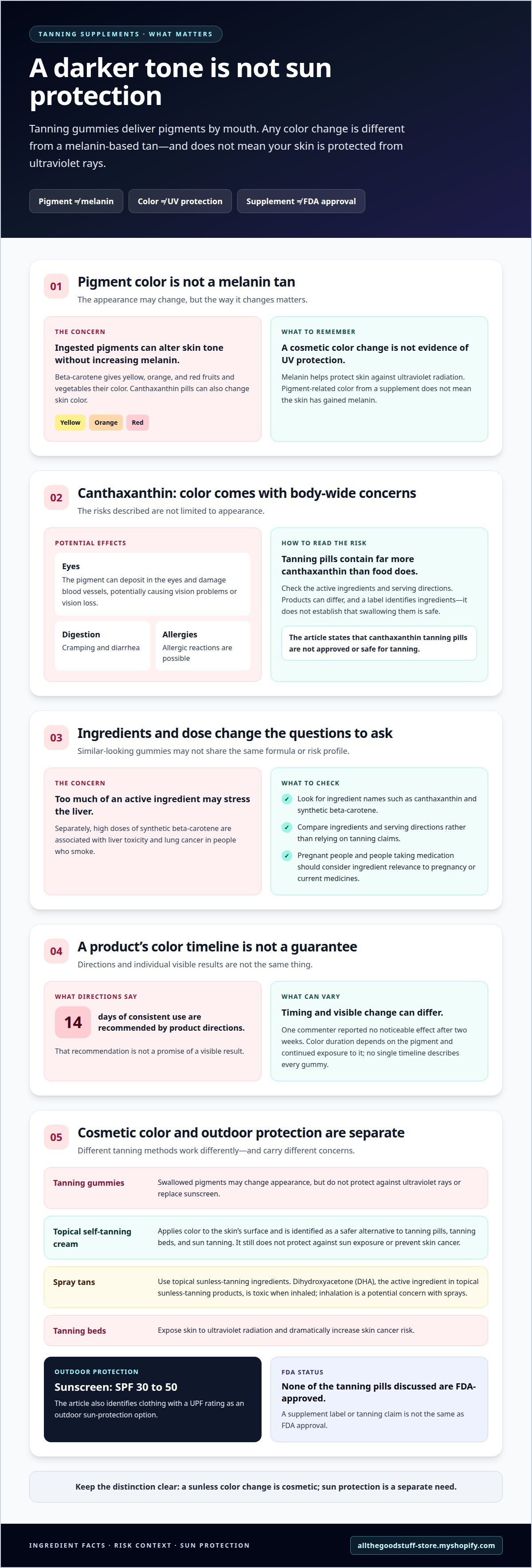
How tanning pills affect skin color
Tanning pills use ingested pigments to change appearance. Their color effect is different from a melanin-based tan.
Effects on Skin Color
Beta-carotene gives yellow, orange, and red fruits and vegetables their color. Tanning gummies commonly contain this pigment, which may affect skin tone. Canthaxanthin pills can also change skin color, but not by increasing melanin. According to the U.S. Food and Drug Administration, melanin helps protect skin against ultraviolet radiation. A pigment-related color change does not mean the skin has gained melanin or UV protection. Do not treat a change in appearance as evidence of protection outdoors.
Onset and Duration of Results
Product directions recommend consistent use for at least 14 days. That recommendation is not a promise of a visible result. One commenter reported taking tanning gummies for two weeks without noticing an effect. The timing and visible change can therefore differ. Color duration depends on the pigment and continued exposure to it, rather than increased melanin. No single timeline describes how long every gummy’s color effect remains.
Tanning pills and gummies don’t protect against ultraviolet rays or replace sunscreen. A changed skin tone is not a measure of sun protection. The guidance here recommends sunscreen with SPF 30 to 50 when going outside. Clothing with a UPF rating also provides an outdoor sun-protection option. Keep those measures separate from any cosmetic color change.
Topical sunless-tanning products work differently from swallowed pigments. Creams apply color to the skin’s surface, while tanning pills deliver pigments orally. Dihydroxyacetone, or DHA, is the active ingredient in topical sunless-tanning products and is toxic when inhaled. The application method matters, especially with spray products. Sunless tanning cream also does not protect against sun exposure or prevent skin cancer. Tanning beds and booths are not a substitute, as they dramatically increase skin cancer risk.
Supplement regulation and FDA approval
FDA approval is a specific regulatory status, not another name for a supplement label or tanning claim. According to the U.S. Food and Drug Administration, none of the tanning pills discussed are FDA-approved. A product described as a tanning supplement has not, by that description alone, been approved by the FDA for tanning. Read product information without treating promotional wording as proof of approval.
For U.S. buyers, tanning gummy costs vary by product and package size. Compare the serving count, directions, and ingredient list to understand what each package contains. Look for named pigments such as beta-carotene, astaxanthin, or canthaxanthin. Check the amount listed per serving and whether the directions describe regular use. These details clarify the formula, but do not change its FDA approval status.
Start a label review with the full ingredient list, not just the claim on the front of the package. Identify each pigment and note the amount and serving size. Then read the directions and warnings. This helps distinguish the actual formula from broad phrases such as “tanning support.” If the label names beta-carotene, its presence alone does not establish an FDA-approved tanning effect.
FDA approval and ingredient details answer different questions. Approval status concerns whether a product has that specific agency status; the label describes what the product contains and how it is directed for use. Don’t treat a listed ingredient as proof that a gummy is FDA-approved, or as evidence of sun protection. For readers reviewing a supplement option, view the Sun Tanning Soft Gummies and read the product details alongside these label points.
My Store: Men's Lapel Knit Pullover Sweater
My Store offers the Men's Lapel Knit Pullover Sweater as a clothing option for readers considering a change in appearance. It is separate from tanning supplements and does not change skin color or provide sun protection. Browse it if you are looking for apparel rather than a supplement for a cosmetic effect.
My Store also offers an Automatic Electric Hair Curler and Waver Iron, a Breathing Necklace for Anxiety, and a Breathing Plush Music Doll. These products are not substitutes for sunscreen or medical care. If you are researching tanning gummies, focus on the ingredients, possible side effects, and FDA status covered above.
Visit My Store to browse the Men's Lapel Knit Pullover Sweater.
Choose Your Next Step With a Clear Goal
With a clearer sense of what to know about tanning gummies, decide what outcome you want before choosing a product. A cosmetic preference, outdoor protection, and a general personal-care purchase are different goals. Keeping them separate can make your next decision more focused and help you judge whether a product suits your purpose.
Use the same approach when browsing any product category: identify the intended use, read the product details, and compare them with your needs. If you are looking beyond tanning products to everyday items, My Store offers a range of categories to browse. Unrelated products are not substitutes for sun protection or health advice.
For questions about store offerings, contact My Store. A clear goal makes it easier to choose the next step that fits.
Frequently Asked Questions
What are tanning gummies and how are they supposed to work?
Tanning gummies are oral supplements marketed to alter skin appearance using pigments. Formulas can combine ingredients such as beta-carotene, astaxanthin, and lycopene. One example serving contains 24 mg of astaxanthin, 50 mg of lycopene, and 7,500 mcg of beta-carotene. A key point in what to know about tanning gummies is that formulas differ, so read each ingredient panel and serving amount.
Do tanning gummies actually darken skin, and what does scientific evidence show?
Some tanning pills can change visible skin color, but that does not show increased melanin or sun protection. The U.S. Food and Drug Administration says canthaxanthin’s color effect does not come from increased melanin. A personal report of no noticeable change after two weeks also illustrates why one person’s experience cannot establish a consistent outcome. Treat anecdotal results as individual observations, not proof that a formula works reliably.
What are the risks and side effects of tanning gummies, including high-dose beta-carotene?
Risks depend on the ingredients and amounts in a gummy. Canthaxanthin-containing pills may cause eye or digestive problems and allergic reactions, while too much active ingredient may stress the liver. High doses of synthetic beta-carotene are associated with liver toxicity and lung cancer in people who smoke. Before considering a product, check whether the label identifies synthetic beta-carotene, the serving amount, and directions.
Are tanning gummies FDA-approved or regulated in the United States?
According to the U.S. Food and Drug Administration, none of the tanning pills discussed here are FDA-approved. This statement applies to the products discussed, not automatically to every supplement or ingredient. Check the exact product’s claims and ingredient panel rather than assuming a tanning label signals FDA approval. Approval status, listed ingredients, and sun protection are separate considerations; one does not establish the others.
How much do tanning gummies cost in the United States, and what should buyers check on labels?
Check the serving count and directions, full ingredient list, and amounts per serving.