
The conductive layer matters as much as the current. A facial microcurrent device sends a low-level electrical current through the skin toward facial muscles, and conductive gel helps the current reach them. At-home sessions typically take five to 10 minutes, with clean, dry skin and gel applied just before treatment.
Choosing a facial microcurrent device involves more than comparing functions. Gel requirements, light therapy options, included accessories, and bundle contents can all affect which setup fits your routine.
This guide explains how microcurrent works and what to compare across devices, gels, light features, prices, and bundles. It also covers the temporary nature of at-home results and the role of regular use, making product details easier to assess before choosing a device.
Key Takeaways
- Learn what separates professional treatments from home-use devices and what that means for your routine.
- See how clean, dry skin and a conductive product fit into device preparation.
- Compare features, attachments, and light options by the functions they add to a routine.
- Use bundle contents and included accessories to compare buying options without focusing on features you may not use.
How do microcurrent devices work?
A facial microcurrent device uses low-level electrical current for at-home facial application. Compare its intended use and instructions with the routine you can follow consistently.
How At-Home Microcurrent Works
At-home devices deliver a low-level current through contact points placed against the skin. Home devices can reach about 700 to 1,000 microamperes. Follow the device’s application instructions, including where to place the contacts and how to move them. This helps you target the areas the device is designed to treat.
Facial Toning and Lifting
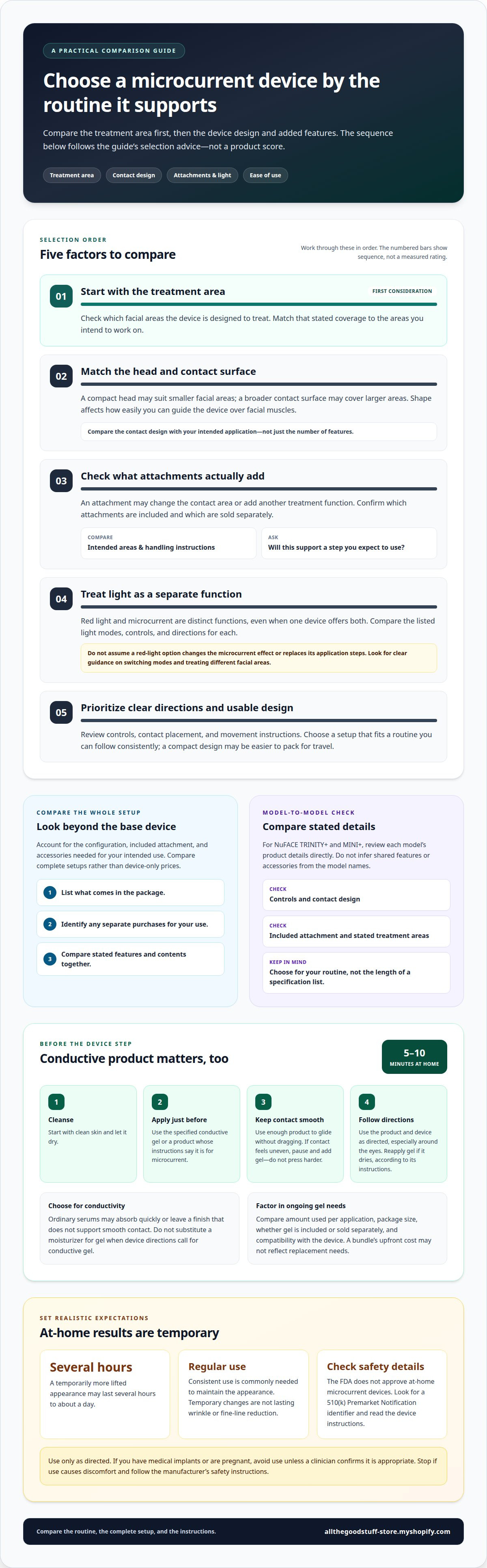
At-home toning aims to create a temporarily more lifted appearance. Results may last several hours to about a day, so regular use is needed to maintain the effect. Treat claims about wrinkles and fine lines cautiously: temporary changes in appearance are not the same as lasting reduction. Check the stated treatment area and directions before choosing a routine.
Professional and at-home devices differ mainly in setting and intended use: one is used in a professional treatment, while the other is designed for personal application. The research facts here do not establish a direct comparison of their output. For home use, prioritize clear instructions and a device suited to your routine. A compact design may be easier to pack for travel, but follow its directions wherever you use it.
Editor-tested coverage evaluated 15 microcurrent devices and tried five. At-home results are temporary, and consistent use is commonly needed to maintain their appearance. The Food and Drug Administration does not approve at-home microcurrent devices; doctors stressed seeking FDA certification through a 510(k) Premarket Notification. Buyers should look for that identifier and read the device’s instructions.
Use the device only as directed, with the specified conductive product and application method. People with medical implants or who are pregnant should avoid using it unless a clinician confirms it is appropriate. Stop if use causes discomfort, and follow the manufacturer’s safety instructions.
Conductive gel and other products
Conductive gel creates a continuous contact layer between skin and device. For a simple routine, cleanse first and let your skin dry, then apply the gel immediately before treatment. Use enough to let the device glide without dragging. If contact feels uneven, pause and add more gel rather than pressing harder. Follow the device’s application directions, especially around the eyes.
A conductive primer or serum can serve a similar purpose when its instructions specify use with microcurrent. Ordinary skincare serums may absorb quickly or leave a finish that does not support smooth device contact. Check the product label alongside the device directions. For example, if the instructions call for conductive gel, don’t substitute a moisturizer just because it feels slippery. The goal is reliable conductivity, not a more powerful skincare treatment.
Keep the rest of your skincare routine separate from the device step. Cleanse before treatment, use the conductive product during application, then follow with skincare afterward if appropriate for your routine. Avoid layering several products under the device without guidance, as extra texture can make consistent contact harder to maintain. If gel dries during use, reapply it according to its directions.
To compare gel costs, consider the amount used per application, package size, and whether the formula is sold separately or included with a device. A low upfront bundle cost may not reflect ongoing replacement needs. Compare the gel’s intended use, ingredients, and compatibility rather than relying on label claims alone. “Cleared” wording should not replace checking that the gel is designed for conductive application.
For a device-and-gel comparison, browse the 7-color microcurrent facial massager alongside the product details and routine requirements. The listed device is a beauty facial massager; use its own directions to guide product pairing and application.
Device features, attachments, and light therapy
Compare each model’s contact design, controls, treatment areas, and included accessories. For example, a compact head may suit smaller facial areas, while a broader contact surface may cover larger areas. The shape affects how easily you can guide the device over facial muscles. Match the design to your intended application, not just the number of features.
An attachment can change the contact area or add another treatment function. Before choosing, identify which attachments come with the device and which are sold separately. Then compare their intended areas and handling instructions. A useful attachment supports a step you expect to use, rather than adding a feature that stays unused in storage.
Red light and microcurrent are distinct functions, even when one device offers both. Compare the listed light modes, control settings, and directions for each function. Don’t assume a red-light option changes the microcurrent effect or replaces its application steps. Look for clear instructions on switching modes and using the device on different facial areas.
For NuFACE TRINITY+ and MINI+, compare the stated features directly rather than relying on model names. Review each model’s controls, contact design, included attachment, and stated treatment areas. This makes the comparison more relevant to your routine and face. Don’t assume the devices share functions or accessories unless their product details say so.
A practical selection process starts with the treatment area, then considers the device head, available attachments, light options, and ease of use. This approach also helps assess how featured home microcurrent devices were selected: relevant functions and usable design matter more than a long specification list. Note the features that support your routine before comparing models.
When comparing prices, account for the device configuration, included attachment, and any separate accessories needed for your intended use. Compare complete setups, not just the base device. For example, a model with an included attachment differs from one that requires a separate purchase. Check the listed contents and feature details together before judging overall value.
Device prices and product bundles
Compare the complete setup, not just the device’s displayed price. A bundle may include the device, conductive gel, an attachment, or other accessories. For example, a device-and-gel package can save you from shopping separately, while a device-only package may require additional products. Check the itemized contents before deciding which offers better value.
Separate included items from recurring purchases. Conductive gel may need replacing as you continue treatment, so consider whether the bundle contains a usable supply and what the product listing says about refills. An included attachment matters only if it supports an application you expect to use. This comparison helps avoid paying for extras that don’t fit your routine.
Features determine how useful a package is, not simply how extensive it appears. Compare the electrical treatment function, light options, contact design, and accessories against your intended use. For example, a beauty device with several modes may offer more options, but its practical value depends on whether those modes suit your skincare routine. Choose functions you can use consistently.
For a clear comparison, make a short checklist:
- Device included, with its stated functions and treatment areas.
- Conductive gel or primer included, plus any refill requirement.
- Attachments and accessories included, separated from optional extras.
- Bundle contents compared with the same items purchased separately.
Then compare like with like. A package containing a device and gel is not directly comparable to a device-only listing until you account for the additional product. Read the contents and product details together. This gives you a clearer view of the total purchase without treating a feature count as proof of a lifted effect on your skin.
Use the product listing to review available beauty-device options and their included contents. Browse beauty device options and compare the listed functions with your intended routine before selecting a package.
My Store: Men's Lapel Knit Pullover Sweater
My Store offers the Men's Lapel Knit Pullover Sweater for shoppers browsing apparel alongside personal-care and lifestyle products. For beauty-device buying guidance, use the comparisons above to assess device functions, gel needs, accessories, and bundle contents before choosing a setup.
The store also features an Automatic Electric Hair Curler and Waver Iron, a Breathing Necklace for Anxiety, and a Breathing Plush Music Doll. These products serve different everyday needs, so choose by category and intended use rather than treating them as alternatives to facial microcurrent equipment.
Browse the listed product categories for a practical next purchase after completing your device comparison. Visit allthegoodstuff-store.myshopify.com to view My Store's offerings.
Choose a Setup That Fits Your Routine
Before choosing a facial microcurrent device, decide what would make it practical to use, such as straightforward controls, a comfortable grip, or a compact setup. Then compare the listed features with those priorities. A longer feature list matters less if the device feels complicated to operate or includes options you won’t use.
Use product details to create a short, personal decision checklist. Note which functions you want, which accessories are essential, and whether the application steps fit your skincare habits. This gives you a clearer basis for comparing listings and keeps the choice focused on day-to-day usability rather than appearance or marketing language.
Keep expectations grounded in the device’s stated purpose and directions. Read the product information before purchase, and follow its instructions during use. If you’re ready to review the available device options, Contact My Store about device options.
Frequently Asked Questions
Can you overdo microcurrent?
Yes. Adding sessions or extending treatment beyond the device directions means using it more than intended. Extra use isn’t a reliable way to speed visible changes. Follow the model’s schedule, and don’t repeat a session to make up for a missed day. Stop if application causes discomfort, and review the safety instructions before using the device again.
Is it okay to use microcurrent every day?
Daily use isn’t the default for every model. At-home device instructions commonly recommend five treatments a week, while aesthetician Lara Kaiser recommends using a device every other day. Follow the schedule for your specific model rather than combining routines. If its directions include rest days, keep them in your plan instead of adding extra sessions.
What is a home microcurrent facial tool, and how does it work?
A facial microcurrent device is a handheld beauty tool that delivers low-level electrical current through skin-contact points. Its intended effect is a temporary change in the appearance of facial contours. Unlike a manual massage tool, it uses electrical stimulation rather than pressure alone. Compare treatment areas and contact methods to see how a model could fit your routine.
Which devices are best-rated in the United States?
Compare ratings from the same review source, then look for feedback about handling, consistent skin contact, included attachments, and clear instructions. Treat star averages as one consideration, not proof of equivalent results. Compare the exact model and bundle configuration in each US listing, since products with similar names may have different accessories.
How much do these devices cost, and what are typical replacement costs?
Total ownership cost includes the device and any conductive gel or separately sold attachment needed for your routine. Replacement spending depends on package size, gel used per application, and whether accessories come in the bundle. Compare included contents with individual listings, then review refill or replacement details. The total depends on the setup you choose.
How do popular models compare by features, price, and results?
Compare each facial microcurrent device by its included features, bundle contents, and instructions for each function. Match those details to the treatment area and routine you can maintain. Compare listed prices only after accounting for any gel or attachments needed. Results are temporary, so a longer feature list alone can’t show which model will create the most noticeable effect for you.