
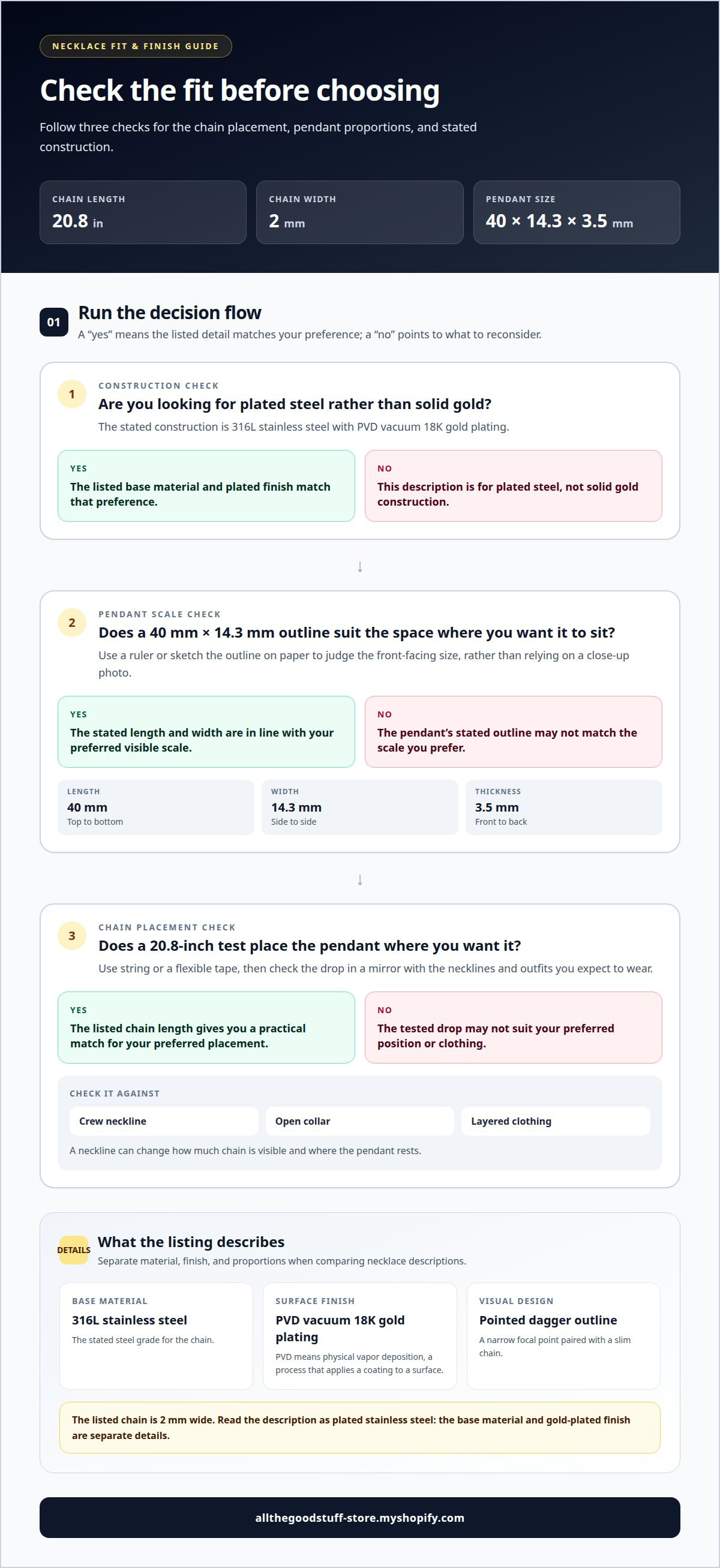
A dagger pendant necklace can pair a 316L stainless steel chain with PVD vacuum 18K gold plating. The chain measures 20.8 inches long and 2 mm wide, while the pendant measures 40 mm by 14.3 mm by 3.5 mm.
These measurements clarify a necklace’s proportions before purchase. Chain length indicates where it may sit, width suggests its visual weight, and the pendant’s dimensions describe its overall size. Material and plating affect the finish, so check those details too.
This guide explains what 316L stainless steel and PVD vacuum gold plating mean, how to read the listed dimensions, and what the measurements can tell you about the pendant’s appearance. It also covers the necklace’s visible design details, giving you practical points to consider when comparing its proportions and finish with your preferences.
Key Takeaways
- Compare the pendant’s 40 mm by 14.3 mm by 3.5 mm dimensions with the scale you prefer before choosing.
- Use the 20.8-inch chain length and 2 mm width to picture how the necklace may sit and look when worn.
- Understand how 316L stainless steel and PVD vacuum 18K gold plating contribute to the necklace’s material and finish.
- For school, workplace, or venue wear, use the applicable accessory rules to guide your decision.
Dagger pendant necklace description
This pendant pairs a pointed, blade-shaped design with a fine chain. The chain uses 316L stainless steel and PVD vacuum 18K gold plating. These details describe its base material and surface finish, not its exact appearance under every light. The dagger outline creates a narrow focal point against the chain.
316L identifies the stainless steel grade used for the chain. PVD means physical vapor deposition, a process that applies a coating to a surface. Here, the coating is 18K gold plating. Read the material description as two parts: stainless steel for the chain’s base, and gold plating for its finish. It describes plated steel, not solid gold construction.
For a practical comparison, separate the necklace into three visible elements: pendant shape, chain finish, and chain proportions. The chain measures 20.8 inches long and 2 mm wide. Its narrow width keeps attention on the pendant’s dagger profile. A dagger pendant necklace with these proportions offers a defined vertical shape against a slim chain.
- Shape: A dagger outline, with a pointed, blade-like form.
- Base material: 316L stainless steel.
- Surface finish: PVD vacuum 18K gold plating.
- Chain: 20.8 inches long and 2 mm wide.
Use those details to compare listings without assuming similar-looking pieces share materials. Check whether each description names stainless steel, plating type, and chain measurements. For example, “gold-tone” describes appearance less specifically than 316L steel with PVD 18K plating. This distinction helps you compare a dagger pendant necklace by its stated construction, not color alone.
Before choosing, assess the pendant shape, chain finish, and stated proportions separately. Then consider how they work with the clothing and occasions you have in mind. Comparing each detail makes product descriptions easier to evaluate and helps narrow down your preferred design.
Pendant dimensions
The pendant measures 40 mm by 14.3 mm by 3.5 mm. These figures describe its length, width, and thickness, in that order. The first measurement indicates the dagger’s top-to-bottom span. The second shows its side-to-side width. The final measurement gives its depth from front to back.
Read all three dimensions together. A length of 40 mm describes a longer vertical profile than the width of 14.3 mm. The 3.5 mm thickness adds information that a front-facing product image cannot show. It helps indicate how much the pendant may project from the body, though the measurement alone doesn’t describe its weight or movement.
Use a ruler to picture the pendant’s proportions. Mark 40 mm for the long edge and 14.3 mm for the short edge. Compare that outline with a familiar object or draw it on paper. This gives a more useful size reference than judging scale from a close-up photograph, where camera distance can make small details look larger.
- Length: 40 mm, the pendant’s longest stated dimension.
- Width: 14.3 mm, the side-to-side measurement.
- Thickness: 3.5 mm, the front-to-back measurement.
Consider the pendant and chain together, rather than judging the pendant alone. A narrow dagger can still look prominent because its length creates a vertical line. Its width affects how substantial the blade outline appears, while thickness adds a separate sense of depth. These measurements help compare proportions, but they cannot predict exactly how the piece will look on every wearer.
For a practical fit check, compare the 40 mm length with the visible area where you want the pendant to rest. Then consider whether the 14.3 mm width suits your preferred level of detail. Use the 3.5 mm depth to assess its profile from the side. To review a dagger pendant option, compare its stated dimensions using the same three measurements.
How do I choose the right necklace chain length for a dagger pendant?
Start with the listed chain length: 20.8 inches. To picture its placement, use a flexible measuring tape or a piece of string. Position it around your neck, then bring the ends together at the intended length. Check the resulting drop in a mirror. This gives a more personal reference than viewing the necklace flat in a product image.
Test the length with clothing you expect to wear. A crew neckline, open collar, or high neckline can change how much chain is visible. Place a string over each neckline and note where the pendant would rest. A dagger’s vertical shape may look different against bare skin than against patterned or layered fabric.
- For a neckline comparison: Try the string over a crew-neck top.
- For an open collar: Check whether the pendant sits within the visible opening.
- For layered clothing: See whether fabric covers the chain or pendant.
- For everyday wear: Repeat the test with a frequently worn outfit.
Consider the pendant’s position as well as the chain’s appearance. A chain that looks right at the neckline may place the pendant lower than you prefer. Use the string test to estimate where it will rest, then see whether that position suits your outfit. The pendant’s proportions also affect how prominent it looks there.
Compare the test with the necklace’s stated 20.8-inch length. Keep the tape or string placement consistent, and avoid judging fit from a photograph alone. Camera angle and garment styling can shift the apparent position. If the measured length matches your preference across several outfits, it offers a practical basis for selecting this chain length.
For a dagger pendant, balance three factors: visible chain, pendant placement, and clothing neckline. The 20.8-inch measurement gives a fixed reference, while your neck shape, posture, and garments affect how it appears. A quick mirror check with a string can show whether the pendant sits where you want it, before relying on styling images.
Are dagger pendant necklaces allowed in schools, workplaces, or public venues?
In the United States, permission depends on the specific school, workplace, or venue. Each organization sets its own rules for accessories and entry. A dagger-shaped pendant may be treated differently from a simple geometric charm. Consider the setting, written policy, and pendant’s appearance before deciding to wear it.
At school, review the student handbook or dress code before wearing a blade-shaped necklace. Look for rules about weapon-like images, jewelry, and classroom safety. Expectations may differ between ordinary classes, ceremonies, and supervised activities. Follow the policy for the specific campus and event rather than assuming another school has the same rules.
- School: Read the current student handbook and dress rules.
- Workplace: Check employee guidelines for jewelry, uniforms, or safety.
- Public venue: Review entry conditions for the specific event or location.
- Unclear wording: Ask the responsible staff member before arrival.
At work, consider both appearance standards and task requirements. An office dress code may address visible accessories, while a hands-on role may restrict loose jewelry. For example, a pendant worn over a uniform may be more noticeable than one beneath a shirt. Follow the rules for your role and work area.
Public venues can also set entry conditions. A concert, museum, courthouse, or sports venue may have different screening procedures and visitor rules. Check the conditions for the specific location and event. If staff ask you to remove or store the pendant, follow their directions for entry.
Use a simple decision process: identify the venue, read its current rules, and assess whether the pendant’s blade shape could be misunderstood. If wording is unclear, seek guidance from the organization before attending. For a jewelry option to compare, view the Love Dagger Necklace.
My Store: Men's Lapel Knit Pullover Sweater
My Store offers the Men's Lapel Knit Pullover Sweater as an apparel option alongside jewelry browsing. After comparing a pendant’s proportions and chain placement, consider how clothing completes the outfit. A collared knit pullover offers a different styling option from a T-shirt or open-neck shirt. Consider the neckline and fabric when deciding whether the pendant will remain visible or sit beneath your clothing.
Use the product name to find the apparel item in the store. The catalog also includes personal care and wellness products, such as an Automatic Electric Hair Curler and Waver Iron and a Breathing Necklace for Anxiety. These belong to separate categories and are not substitutes for a pendant or guidance on venue policies.
Browse the Men's Lapel Knit Pullover Sweater at My Store.
Choose a Piece That Fits Your Plans
Let your intended use guide your decision. A dagger pendant necklace makes a distinctive accessory, so consider where you expect to wear it. Think about your everyday clothing, upcoming events, and comfort with a blade-shaped design. For school, work, or a public venue, factor in the relevant dress and entry policies.
Set a practical standard before choosing: the design should suit your style and the situations you have in mind. You could keep another accessory available for occasions with stricter dress expectations. This gives you flexibility without changing what you like about the pendant. Choose a piece that feels appropriate for your plans, not just one that looks appealing in a product photo.
Ready to take the next step? Contact My Store about this necklace and explore the option at your own pace.
Frequently Asked Questions
What styles and materials are common for dagger pendants?
Styles range from simple blade silhouettes to detailed designs, and materials and finishes vary by item. A dagger pendant necklace may have a clean outline or decorative details. Compare the pendant shape, chain style, and material description. A slim silhouette, for example, creates a different look from an ornate design. Read the listing carefully, since color alone does not identify the metal or finish.
Which metals may suit sensitive skin?
No single metal suits everyone with sensitive skin. For a dagger pendant necklace, review the stated materials and consider which metals you already tolerate. Color and shine do not identify the underlying metal. Pay attention to how the pendant and chain feel against your skin. Stop wearing jewelry if irritation occurs, and seek professional advice if symptoms persist.
Are there age restrictions or shipping rules for buying dagger jewelry in the United States?
Shipping terms may vary by order, so check the listing for details.