
More products don’t automatically make a better routine. The right health & beauty choices depend on your needs: fine-line care, wellness, body care, hair-loss concerns, or everyday hair care each calls for a different product category. Match the intended use to your priority, then compare the format, ingredients, and directions.
A popular claim or familiar ingredient can catch your eye, but a practical buying decision starts with what you want a product to do and how it fits into your routine. Clear product information helps you compare options and focus on the features relevant to your concern.
This guide covers fine-line products, wellness items, body-care options, hair-growth products, styling tools, and everyday hair-care choices. It explains what to consider in each category, how product purpose and directions can shape a shortlist, and which label details to review. Narrow the options by concern and intended use rather than choosing on broad claims alone.
Key Takeaways
- Compare fine-line products by their stated purpose and directions to narrow choices that fit your skincare routine.
- Choose wellness items by how they fit into your daily habits, then review the product details before deciding.
- Use body-care labels to compare ingredients and intended use, especially when selecting products for sensitive skin.
- Separate hair styling from hair-growth care: identify your priority first, then compare tools and topical product options accordingly.
Fine lines and wrinkles
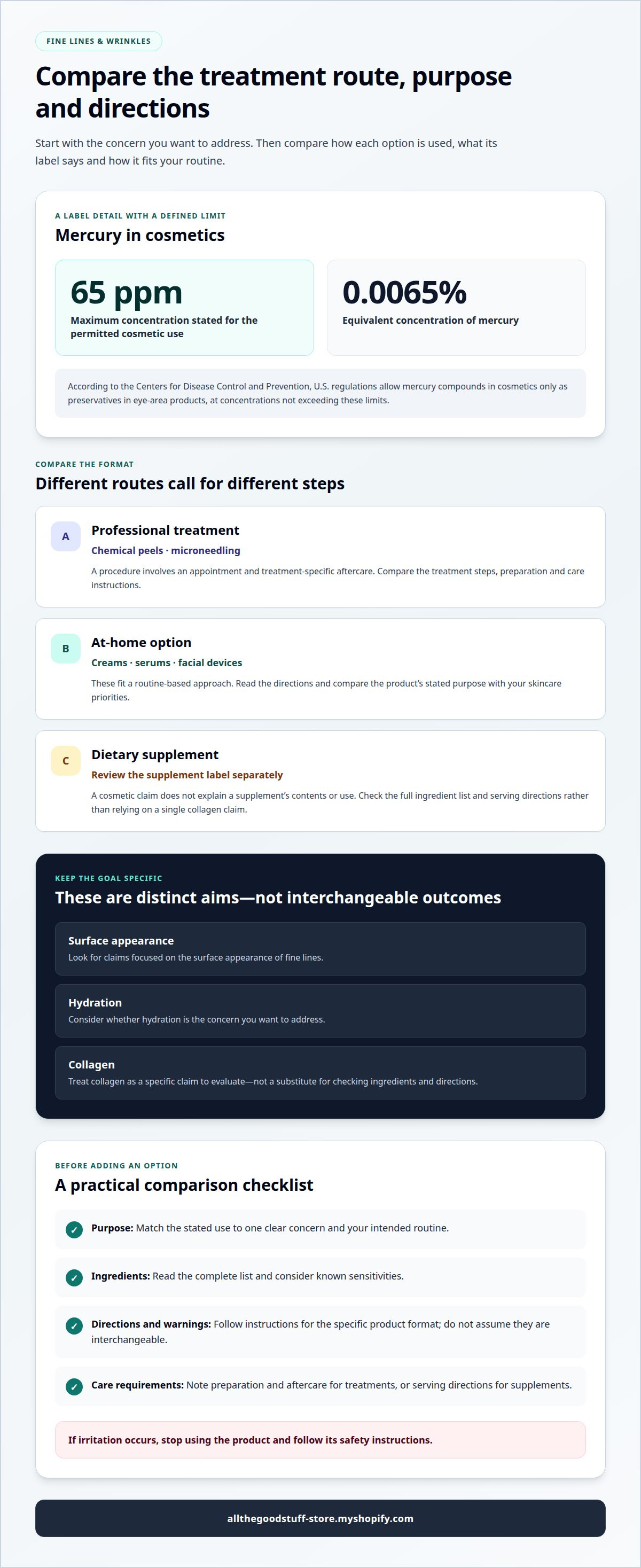
Compare wrinkle-care options by their purpose, application, and directions. According to the Centers for Disease Control and Prevention, U.S. regulations allow mercury compounds in cosmetics only as preservatives in eye-area products, at concentrations not exceeding 65 ppm (0.0065%) of mercury. For dietary supplements, read the ingredient list and directions separately; a cosmetic claim doesn’t explain a supplement’s contents or use.
Professional and At-Home Treatment Options
Professional treatments may include procedures such as chemical peels or microneedling. At-home options include creams, serums, and facial devices. The key difference is the method: compare the treatment steps, intended use, and care instructions before choosing. A topical product, for example, fits a routine-based approach, while a professional procedure involves an appointment and treatment-specific aftercare.
For either route, consider the specific concern, skin sensitivity, and time available for routine care. Check whether claims focus on surface appearance, hydration, or collagen. These are distinct aims, not interchangeable outcomes. For an at-home device, read the directions before use and compare its stated purpose with your skincare priorities.
Treatment and Supplement Risks
Risks vary by ingredients, application, and treatment intensity. A peel, facial device, and supplement each have different directions and conditions of use. Review warnings and the full ingredient list before adding a product. If irritation occurs, stop using it and follow its safety instructions.
Supplements can contain multiple ingredients, so compare the full label rather than relying on a single collagen claim. Keep serving directions visible and avoid combining products without understanding their ingredients. For treatments, note any preparation and aftercare instructions. These steps help you identify potential discomfort, sensitivities, and product-use limits before starting.
Build a shortlist around one priority, such as smoothing the look of fine lines or maintaining a consistent skincare routine. Compare product purpose, ingredients, and instructions side by side. A clear match between stated use and your intended routine is more practical than choosing on a broad wrinkle claim alone.
Wellness product recommendations
Choose wellness products by their purpose, ingredients, and directions. Start with the need you want to address, such as relaxation or maintaining a consistent skincare routine.
Choosing Safe and Effective Products
Start with the label. Identify the product’s intended use, how to apply it, and any stated warnings. Compare those details with your routine and the specific concern you want to address. A facial device and a topical product, for example, involve different steps, so their directions aren’t interchangeable.
Check that the packaging provides an ingredient list and clear instructions. Follow the stated use instead of increasing frequency or combining products to pursue a faster result. Keep a simple record of new products and how you use them. This makes it easier to identify which item may be connected to a change in your routine.
For health & beauty products, prioritize specific information over broad claims. A clear purpose and usable directions make options easier to compare.
Ingredients to Look For or Avoid
Look for ingredients that match the product’s stated purpose, then review the full list. Avoid ingredients you already know cause sensitivity. Product descriptions can help explain intended use, but they don’t replace the label. Compare the actual ingredients and instructions before choosing between similar formats.
Use this quick label check:
- Match the stated use to your priority, such as skin care or relaxation.
- Review the complete ingredient list, not just featured ingredients.
- Follow directions and warnings for the specific product format.
Keep the comparison focused. For a facial product, consider its intended use, application steps, and fit with existing skincare. For a wellness item, consider how it fits your routine and whether its directions are clear. Browse health and beauty product categories as one way to compare available formats and uses.
Body care
Build a body-care routine around specific areas and product formats. Body wash cleanses, while lotion or cream is applied afterward according to its label. For hands, feet, or elbows, compare products intended for those areas. Start with one clear priority, such as cleansing or adding moisture, instead of buying several products with overlapping uses.
Read each label before choosing. Check the product’s intended use, directions, full ingredient list, and warnings. Compare two lotions by texture, application instructions, and listed ingredients. If you know an ingredient irritates your skin, check for it before purchase. Packaging claims can guide your comparison, but the ingredient list provides product-specific details.
Ingredient names matter for another reason. According to the United States Environmental Protection Agency, elevated exposure to DEA, MEA, or TEA has been associated with irritation of the eyes, skin, nose, and throat. This information does not mean every product containing one of these ingredients causes irritation. Use the label to identify ingredients, then follow the product’s directions and warnings.
Use this simple comparison when reviewing body-care options:
- Purpose: Match the product to a specific use, such as washing or moisturizing.
- Format: Compare a wash, lotion, cream, or balm for how it fits your routine.
- Routine: Add one new product at a time, so changes are easier to track.
For example, when choosing a hand cream, first check its intended use and instructions. Then review the ingredient list for known sensitivities. Keep the packaging available, especially when trying a new item. If discomfort occurs, stop using it and follow the label’s safety directions. These steps make comparisons more specific and help distinguish products by actual use rather than broad body-care claims.
Hair loss and hair health
Hair loss and hair health call for separate buying decisions. Styling tools change appearance; growth products are intended for scalp use. Start by naming the concern: thinning, breakage, dry lengths, or styling control. This separates product purpose from the feature you need. A breakage-focused routine may address handling and styling habits, while thinning raises a different concern.
Notice where the change appears and what it looks like. Short, snapped strands differ from full-length hairs shed during washing. Note changes in styling, products, and scalp care. This record helps you describe the concern clearly and compare products by intended use. For persistent or noticeable shedding, discuss its pattern and timeline with a qualified health professional.
For stronger-looking hair, keep daily care practical. Use a comb suited to your hair and detangle gently, starting at the ends. Follow the directions on shampoo, conditioner, and styling products. When using a heated tool, review its operating instructions and choose a styling approach that suits your hair. Avoid treating a styling device as a hair-growth product.
- For thinning: Compare scalp products by their stated purpose and application directions.
- For breakage: Review detangling, brushing, and heat-styling habits.
- For dry lengths: Compare conditioner formats and their use instructions.
- For styling: Choose a tool based on the finish and technique you want.
A hair growth spray is a topical product category, not a substitute for understanding the cause of shedding. Read its label, application directions, ingredients, and warnings before use. Don’t apply it differently from the instructions or assume a growth-focused description promises a specific result. Keep its purpose distinct from products designed to condition hair or create a style.
For a practical next step, browse hair and beauty products by intended use, then compare the directions with your routine.
My Store: Men's Lapel Knit Pullover Sweater
My Store offers the Men's Lapel Knit Pullover Sweater as an everyday clothing option alongside personal-care and wellness products. For hair styling, the Automatic Electric Hair Curler and Waver Iron is a tool to compare with your routine. The Breathing Necklace for Anxiety and Breathing Plush Music Doll are distinct wellness options. These items serve different purposes, so choose according to the need you want to address rather than treating them as interchangeable.
Choose the relevant product once you’ve identified your priority, whether it’s clothing, styling, or a wellness item. Review the product description and directions as part of your selection.
Contact My Store with questions about choosing among these product categories.
Make Your Next Choice With Purpose
Make your next step a focused choice, not a full routine overhaul. Decide which need matters most right now, then compare products against that purpose. Health & beauty choices are easier to assess when you consider intended use, directions, ingredients, and fit with existing habits together. A shortlist built around those details keeps browsing practical and helps you avoid options that don’t match your needs.
Before choosing, review the product information and consider how you’ll use the item in your routine. If your priorities change, revisit the criteria and build a new shortlist. Aim for a considered selection that suits your needs and everyday habits.
Explore health and beauty options to compare products by category and intended use.
Choose at your own pace, with a clear priority in mind.