
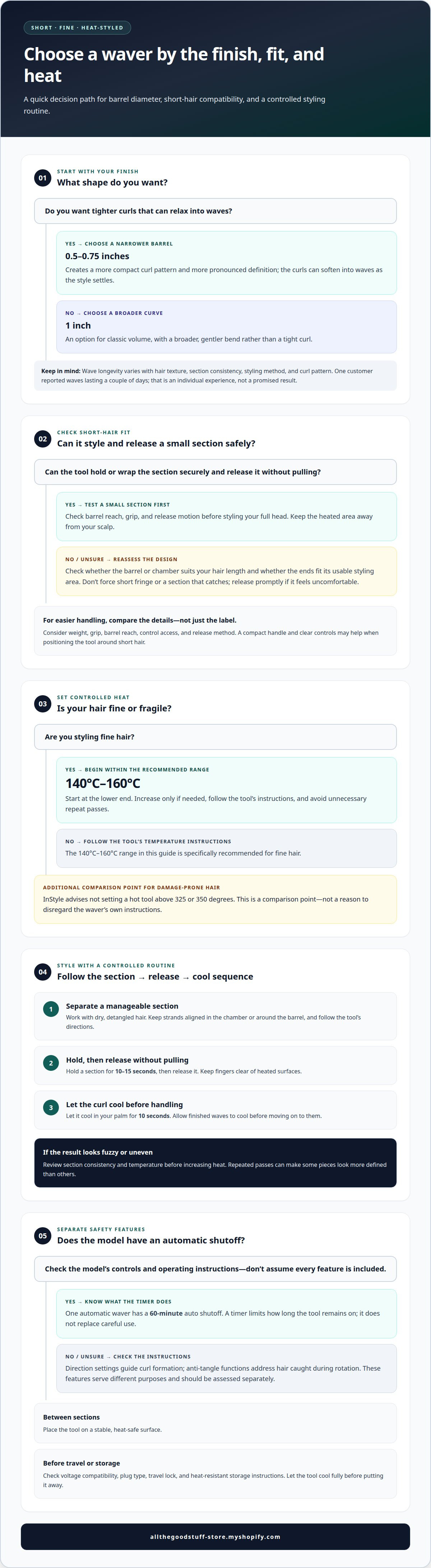
A waver forms repeated bends in the hair, while a curler wraps hair into a rounded curl. An automatic hair waver for short fine hair can use a 0.5- to 0.75-inch barrel to create tighter curls that relax into waves. For fine hair, a styling temperature of 140°C to 160°C is a useful range to compare.
Short lengths and fine strands can make heat styling tricky: a wide barrel may not shape hair as desired, while excess heat can put fine hair under more stress. Focus on barrel size, temperature control, how the style holds, and practical safety features. This guide compares those details and explains how section size and cooling affect the result. You’ll also learn what to check in an automatic waver and whether its design suits a short-hair routine.
Key Takeaways
- Compare automatic shutoff and heat controls, then use the tool only as directed for each hair section.
- Choose a narrower barrel for tighter curls that can relax into waves; consider a 1-inch barrel for classic volume.
- For fine hair, use the recommended 140°C to 160°C styling range and avoid unnecessary repeat passes.
- Assess how barrel size, temperature, and styling technique work together to suit short, fine or fragile hair.
1. Automatic shutoff and safety features
One automatic waver has a 60-minute auto shutoff, a useful timer feature if the tool stays powered after styling. Timer, direction controls, and anti-tangle features serve different purposes, so assess each separately in a model’s controls and operating instructions. The timer limits how long the tool remains on; direction settings guide curl formation; anti-tangle functions address hair caught during rotation. No single feature replaces careful use.
Use a controlled routine on short, fine hair. Separate a manageable section, keep strands aligned in the chamber or around the barrel, and follow the tool’s instructions. Hold a section for 10-15 seconds, then release it without pulling. Let the curl cool in your palm for 10 seconds before moving on. These steps help avoid prolonged contact and reduce tugging when removing hair. Keep fingers clear of heated surfaces, and place the tool on a stable, heat-safe surface between sections.
Check travel features separately from automatic shutoff. Before packing a waver, review its voltage compatibility, plug type, travel lock, and heat-resistant storage instructions. Let the tool cool fully before putting it away. For TYMO CURLPRO PLUS, assess the timer, direction controls, and anti-tangle operation as separate functions. The model name alone doesn’t explain how each control works, so read the operating directions to understand the settings before styling.
For short hair, a lightweight automatic waver may be easier to position near the roots and maneuver around your head. A compact handle and accessible controls can also help when handling small sections. Compare the tool’s weight, grip, barrel reach, and release method rather than relying on a “lightweight” label alone. Try the release motion with a small strand before styling your full head. Short lengths leave less room for awkward positioning, so clear controls and a smooth release matter as much as weight.
2. Curling barrel diameter and curl longevity
For tighter curls that can loosen into waves, compare barrels measuring 0.5 to 0.75 inches wide. The smaller diameter creates a more compact curl pattern, which can relax as the style settles. On short hair, this size can also make defined bends easier to see than a broad, soft wave. Choose it when you want visible texture first, with the option for the curls to drop into a looser finish.
A 1.0-inch barrel is another option for fine hair, particularly when the goal is classic volume. Its larger diameter shapes a broader curve rather than a tight curl. That distinction matters on shorter lengths: a broad bend may appear softer, while a narrow barrel can produce more pronounced definition. Match the diameter to the finish you want, not just the word “waver” on the product label.
How long waves last depends partly on the shape created during styling and how the hair settles afterward. One customer review reports waves lasting for a couple of days, but that is an individual experience, not a promised result. Hair texture, section consistency, styling method, and curl pattern all affect how long waves remain visible. Tighter curls may relax into waves, so the starting shape can influence how the style looks over time.
Compare barrel width by starting with the desired result: tighter curls that soften, or broader volume with a gentler bend. Then check that the barrel can accommodate the hair section without forcing the ends into an awkward position. For a practical comparison, browse automatic waver options and focus on the stated barrel measurements. A clear diameter helps set expectations for wave definition; the chosen size should suit both the short length and the finish you plan to wear.
3. Recommended styling temperature
Fine hair generally calls for controlled heat, not the highest setting available. The guide recommends styling fine hair at 140°C to 160°C. Start at the lower end, then assess whether the hair forms a defined bend without repeated passes. Increase heat only when needed, and follow the tool’s temperature instructions. For damage-prone hair, InStyle advises not setting a hot tool above 325 or 350 degrees. These limits are a comparison point, not a reason to disregard the waver’s own instructions.
Hair shorter than shoulder length can work with an automatic waver if the tool can grip or wrap the section securely and release it without pulling. Check the barrel or chamber design against your hair length, especially near the ends. A tool that requires strands to extend beyond its usable styling area may be difficult to position evenly. Test a small section first, then adjust the placement to keep the heated area away from your scalp.
Bangs call for a different approach from longer sections. Keep them away from your eyes, and style only the part that fits safely within the tool’s working area. For example, create a slight bend at the ends rather than forcing short fringe into a full wave. Choose a lower temperature within the recommended range, and release your hair promptly if it catches or feels uncomfortable. Work in deliberate sections instead of repeatedly heating the same spot.
Frizz can affect how clearly a wave appears, but higher heat isn’t an automatic fix. Uneven sections or repeated passes can leave some pieces looking more defined than others. Work with dry, detangled hair, separate consistent sections, and allow each finished wave to cool before handling it. If the result looks fuzzy, review section consistency and temperature before increasing heat. A careful process at 140°C to 160°C gives fine hair a controlled starting point while preserving the option to adjust technique.
4. Hair wavers for fine or fragile hair
A suitable automatic waver for short, fine hair offers controllable heat, a barrel suited to shorter strands, and an easy release. Prioritize a lower adjustable setting, simple controls, and a design that holds a small section without pulling. When choosing an automatic hair waver for short fine hair, these features matter more than extra settings you may find difficult to use.
Automatic wavers and triple-barrel wavers create waves in different ways. An automatic tool draws or wraps a section around a heated barrel, while a triple-barrel design presses hair between heated barrels. For short hair, compare how much length each design needs to shape the ends and whether you can position it comfortably near the roots. A manageable section and controlled release make either style easier to handle.
In the US, automatic waver prices depend on features such as temperature adjustment, barrel design, direction controls, and shutoff functions. Compare those features with your styling needs rather than paying for settings you won’t use. A basic tool may cost less than a model with more controls because their functions and construction differ.
Heat styling can damage fine hair, especially with high heat, repeated passes, or prolonged contact. Reduce exposure by starting at the lowest useful setting, working through dry, detangled sections, and releasing each section promptly. Instead of reheating a strand to fix a small styling difference, adjust your section placement or technique. Take breaks from daily heat styling to limit repeated exposure.
Before choosing, compare the tool’s temperature options, barrel placement, release method, and shutoff function. A waver that holds a small section securely and releases it smoothly, for example, may be more practical for short, delicate ends than one that needs repeated repositioning. Choose the tool whose heat and handling features match your hair length and styling routine.
My Store: Men's Lapel Knit Pullover Sweater
My Store offers an Automatic Electric Hair Curler and Waver Iron for at-home waves. After considering barrel size, temperature, and safety features, decide whether an automatic styling tool suits your routine. This product is an option to explore if you’re looking for an automatic hair-curling and waving tool. Choose based on the listed features and instructions that fit your hair and styling needs. The store also carries a Men's Lapel Knit Pullover Sweater, a separate apparel option.
Visit allthegoodstuff-store.myshopify.com to view the Automatic Electric Hair Curler and Waver Iron.
Choose a Tool That Fits Your Routine
Before choosing an automatic hair waver for short fine hair, decide what matters most in everyday use: a simple styling process, control over the finished look, or easy handling of shorter sections. Setting a clear priority helps you compare product details without getting distracted by features that don’t suit your routine. Think about how often you plan to style, which finish you prefer, and how much control you want over each section.
Match your priorities to the tool’s stated features and operating instructions. My Store offers the Automatic Electric Hair Curler and Waver Iron for at-home styling. Review its product details to decide whether it suits how you plan to use an automatic waver.
View the Automatic Electric Hair Curler and Waver Iron as you compare your options. A thoughtful feature match can make your next styling choice clearer.
Frequently Asked Questions
What’s the difference between a hair waver and a hair curler?
A waver shapes hair into repeated bends, while a curler forms rounded curls around a barrel. Choose a waver for a more uniform, ridged wave pattern; choose a curler for individual curls or softer bends. For example, alternating curl direction with a curler can create a less uniform finish than using a waver.
Do hair wavers work on different hair types and textures?
Hair wavers can style different textures, but results depend on strand thickness, hair length, and how well your hair holds a shape. Fine strands generally benefit from controlled heat and consistent sections; thicker or coarser hair may call for a different technique. If your hair is naturally curly or textured, detangle it first and work with its natural pattern rather than forcing every section into identical waves.
What barrel size is best for short fine hair?
A 0.5- to 0.75-inch barrel suits tighter curls that can relax into waves, while a 1.0-inch barrel can create classic volume. For a short bob, consider the smaller diameter if you want visible definition near the ends. Choose the larger size for broader bends, and check that the tool can handle your hair length comfortably.
Which hair wavers have adjustable heat settings for fine hair?
Look for an automatic waver with clearly adjustable temperature settings, including a lower option for fine strands. Product names alone don’t tell you whether heat is adjustable, so read the listed controls and temperature range before choosing. A display or simple temperature buttons can make it easier to select and maintain one setting while styling.
What temperature is safest for waving fine hair?
The guide recommends 140°C to 160°C for fine hair, starting at the lower end and adjusting only when needed. For damage-prone hair, InStyle advises not setting a hot tool above 325 or 350 degrees. Use the waver’s instructions, avoid repeated passes over the same strand, and stop if the hair feels unusually hot or catches.
How to use an automatic hair waver on short fine hair without snagging?
Start with dry, detangled hair and separate a small section, keeping strands from crossing. Align the ends smoothly in the tool, keep the section within its working area, and follow the device’s release directions. If your hair resists or tangles, stop instead of pulling. Release it gently, detangle again, and try a smaller section.